
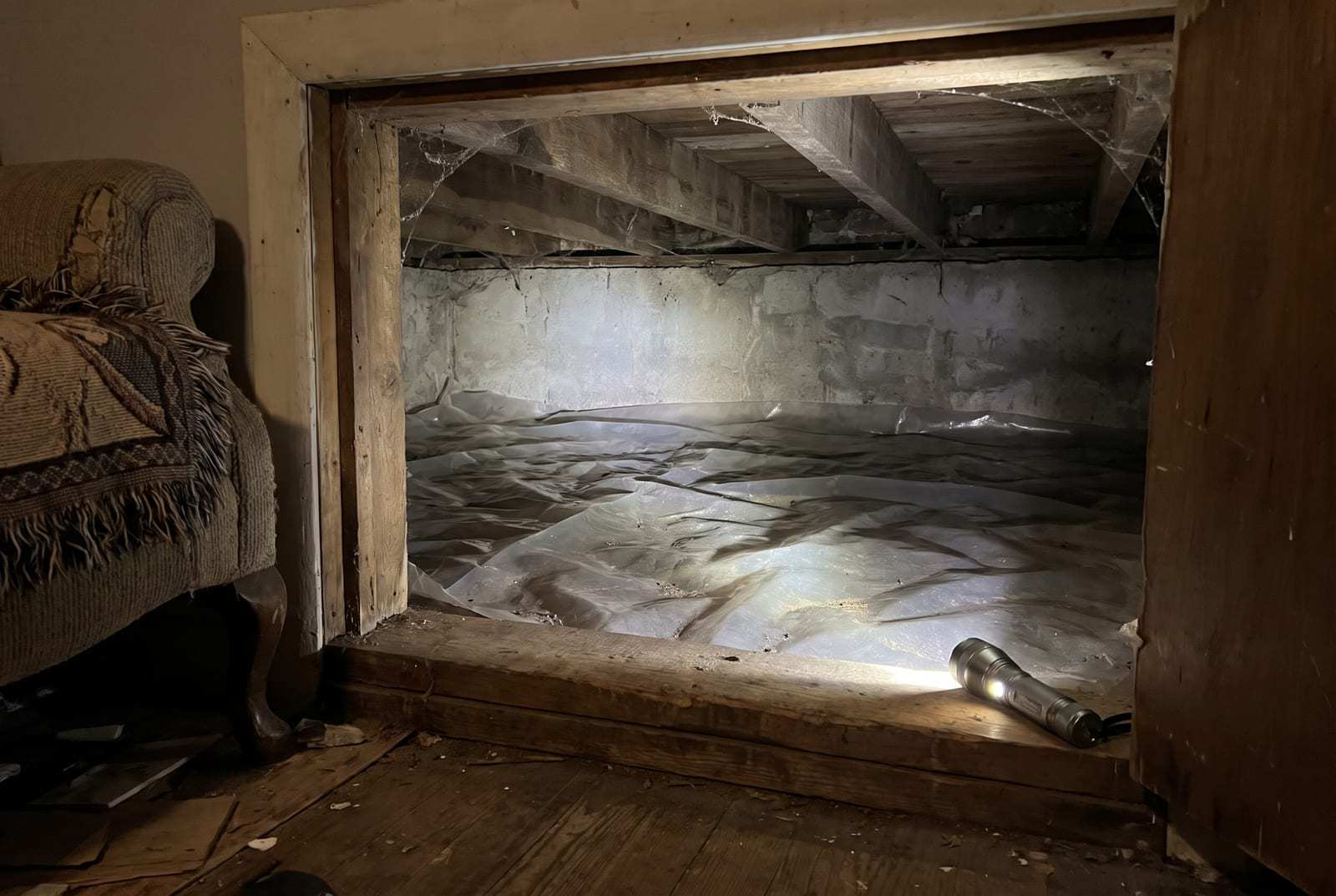
Termites & Wood-Destroying Insects
Termites work out of sight. By the time a floor feels soft or a door frame crumbles, a colony has usually been feeding for a long time. Soft, crumbling wood near the foundation is one of the calls that should not wait.
The termites around Bethel Park are Eastern subterranean termites. They live in the soil and travel up into the house through mud tubes, cracks in the foundation and any wood that touches the ground: porch posts, deck framing, door frames on a slab, firewood stacked against a wall. They eat the inside of the wood and leave the surface, which is why damage often shows only when something gives way.
Signs of Termites
- Mud tubes on the foundation or joists
- Swarmers: winged insects indoors in spring
- Hollow-sounding wood when tapped
- Discarded wings on sills and floors
- Sagging floors or buckled boards
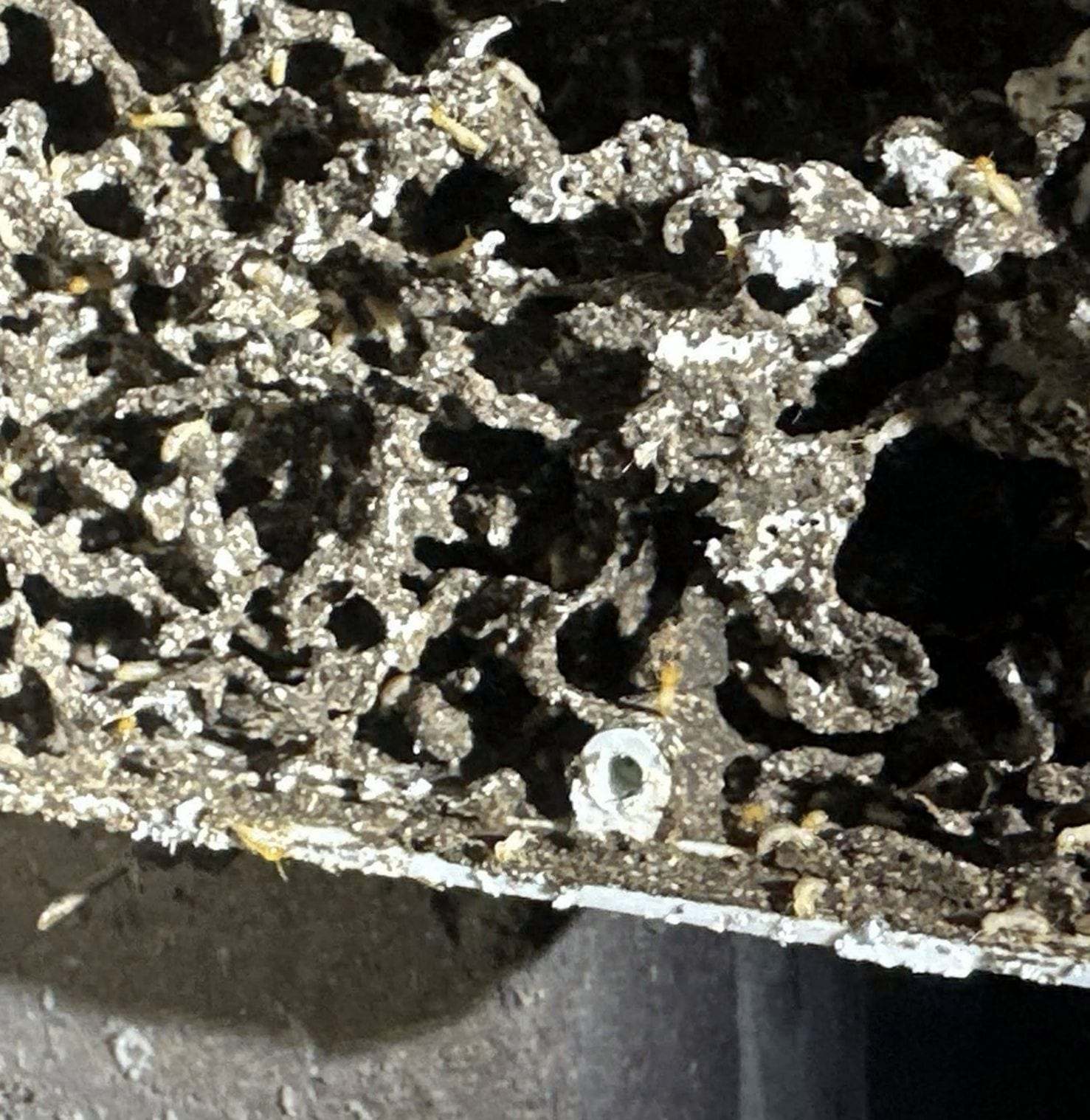
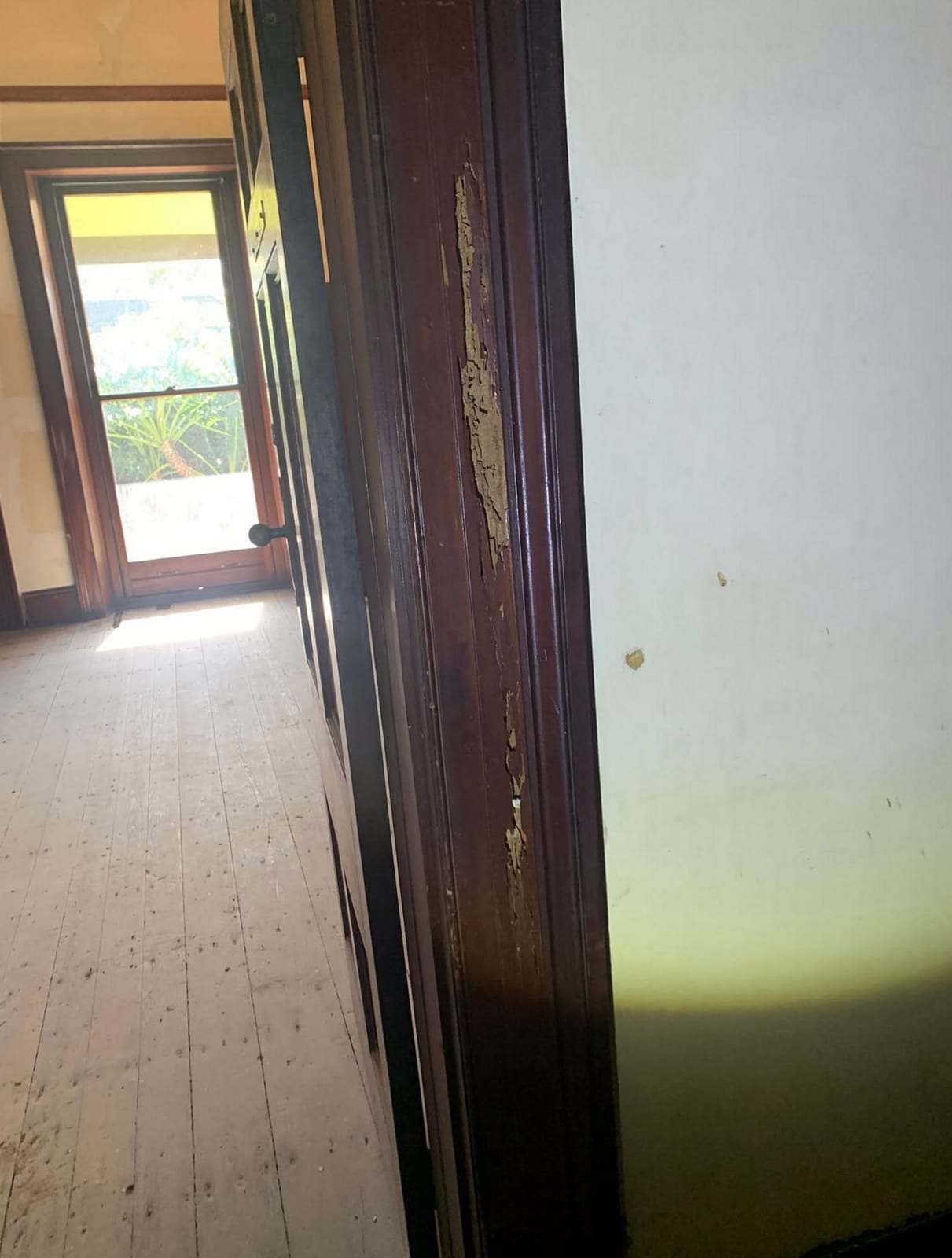
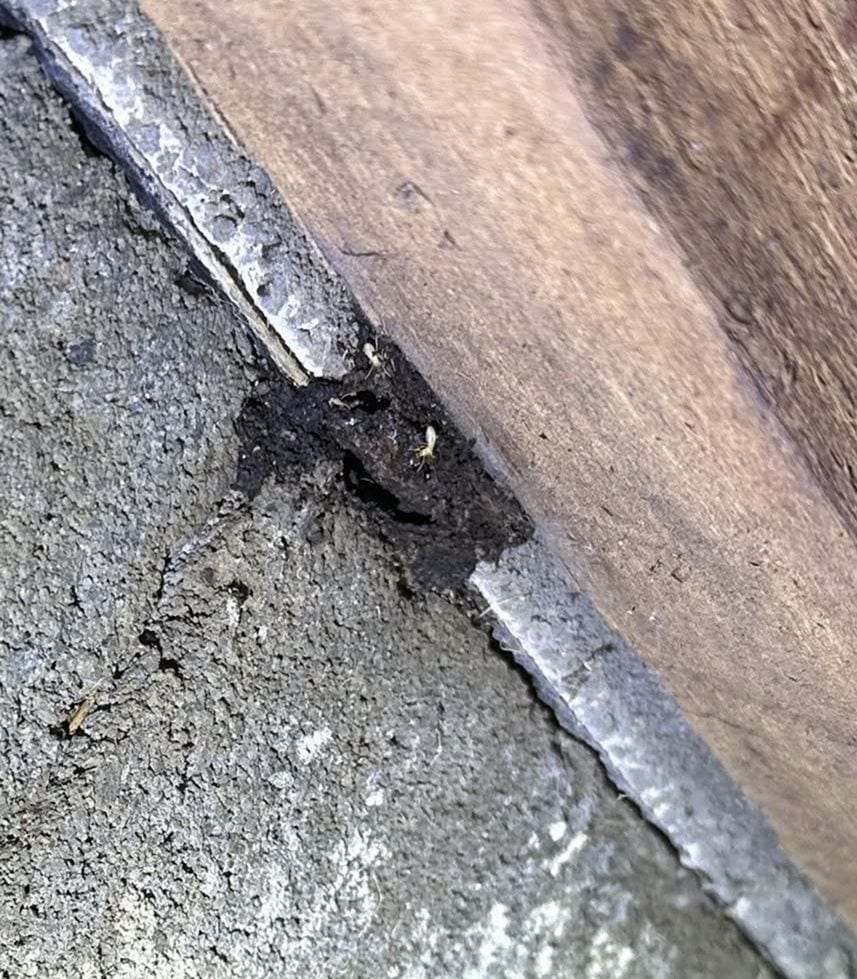
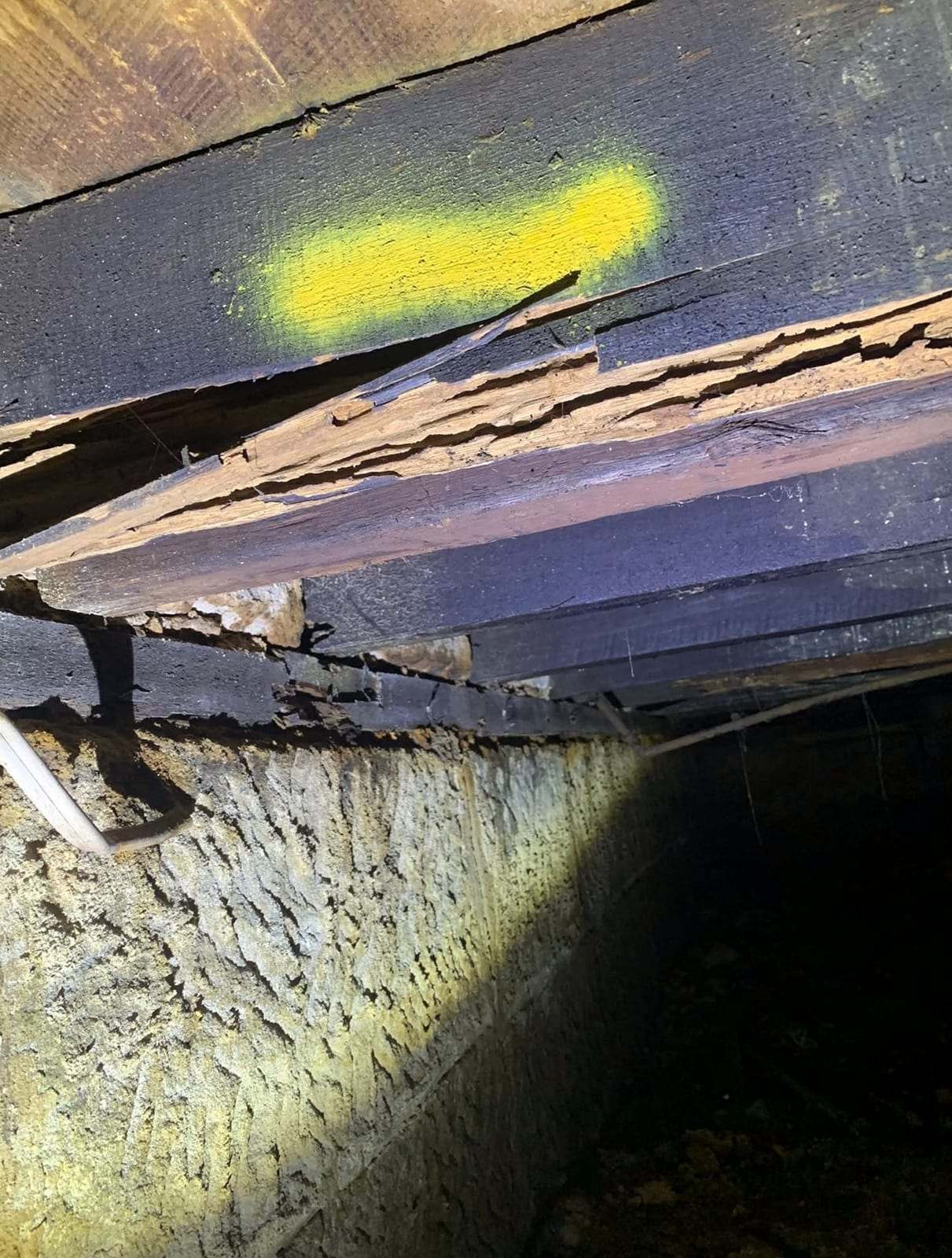
What the signs look like up close: galleries packed with soil inside a timber, mud trails up an interior door frame, and wood eaten away where it sits on concrete. In each case the surface looked sound until it was opened or probed.
How do I tell termite swarmers from flying ants?
Look at the waist, the wings and the antennae. A termite swarmer has a thick waist, straight antennae and four wings of equal length that break off easily. A flying ant has a pinched waist, bent antennae and front wings longer than the back ones. Swarmers indoors, or piles of shed wings on a windowsill, mean termites are in the structure.
Wood-Destroying Pests
| Pest | Signs | Usual location |
|---|---|---|
| Subterranean termites | Mud tubes, swarmers in spring, hollow or layered wood | Sills, joists, door frames, porch and deck framing near soil |
| Carpenter ants | Large black ants, piles of coarse sawdust, rustling in walls | Damp wood: window frames, roof edges, around leaks |
| Powderpost beetles | Tiny round exit holes, fine flour-like powder | Hardwood floors, joists and stored lumber |
| Carpenter bees | Perfectly round holes about half an inch wide, sawdust below | Fascia, deck rails, eaves and unpainted wood |
Termite Jobs
| Job | Purpose | Page |
|---|---|---|
| Termite inspection | Find activity, damage and the conditions that invite termites | Inspections |
| Soil treatment along the foundation | Stop an active colony from reaching the house | How It Goes |
| Monitoring station install | Catch new activity in the soil before it reaches wood | Installations |
| Station checks | Look over the stations on a schedule | Maintenance |
| Wood-destroying insect report | Document conditions for a home sale | Inspections |
| Moisture and wood-to-soil fixes | Remove what keeps drawing termites back | Repairs |
How a Termite Job Goes
- The house is inspected inside and out, with the basement or crawl space, the sills and any wood near the soil probed and checked.
- Where termites are active, the soil along the foundation is treated, or bait is set where a liquid treatment does not suit.
- Monitoring stations can go in around the house afterward, so any new colony is noticed early.
Damaged wood is not always finished once the termites are gone. A bearer or joist that has been hollowed out may need a carpenter to replace it, and the inspection notes where that is the case.
Moisture matters as much as the treatment. Gutters that spill against the foundation, a damp crawl space and mulch piled up to the siding all keep the soil wet and inviting.
What is the difference between termite treatment and monitoring?
Treatment goes after a colony that is already feeding on the house, usually with a liquid barrier in the soil along the foundation or with bait. Monitoring stations sit in the soil around the house and are checked on a schedule, so new activity is caught before it reaches the wood. Many homes get treatment first and monitoring afterward.
Seeing mud tubes or swarmers? Book a termite inspection and leave them where they are.