
Pest Repairs and Exclusion Work
Treatment clears out the pests that are inside. The repair closes the way they came in. Skip it, and the next mouse, wasp or squirrel uses the same opening, often within a few weeks.
On a mouse problem the entry point is checked first, often a gap around a pipe or along the foundation, because traps will not hold for long while the opening stays. The same thinking runs through every repair on this page: find the opening, then close it with something the animal cannot chew or push through. Expanding foam on its own is a common mistake; mice and rats chew straight through it. Gaps are packed with copper mesh or steel wool first and then sealed, and larger openings get metal flashing or hardware cloth.
Common Repairs
| Repair | Pest problem it addresses | Where on the property |
|---|---|---|
| Sealing gaps around pipes, wires and lines | Mice, rats and ants getting in where utilities pass through | Foundation, under sinks, behind the stove and dryer |
| Replacing torn vent screens | Squirrels, birds, wasps and mice using vents as doors | Gable, soffit, crawl space and foundation vents |
| Fixing chewed or loose soffits and fascia | Squirrels and mice reaching the attic from the roof edge | Eaves and roof edges |
| Removing and replacing fouled insulation | Droppings, urine and nesting left by rodents or squirrels | Attic floor and crawl space |
| Patching gnawed holes in siding and drywall | Mice and rats chewing through soft material | Siding seams, garage walls, interior walls |
| Closing gaps at the sill and garage door corners | Mice squeezing under the house or into the garage | Sill plate, garage door jambs and corners |
Signs You May Need a Repair
- Gnaw marks on wood, siding, wiring or plastic pipe
- Gaps at pipes and wires where daylight or a draft comes through
- Torn or missing vent screens
- Damaged soffits or loose fascia at the roof edge
- Disturbed insulation: tunnels, flattened patches or nesting material
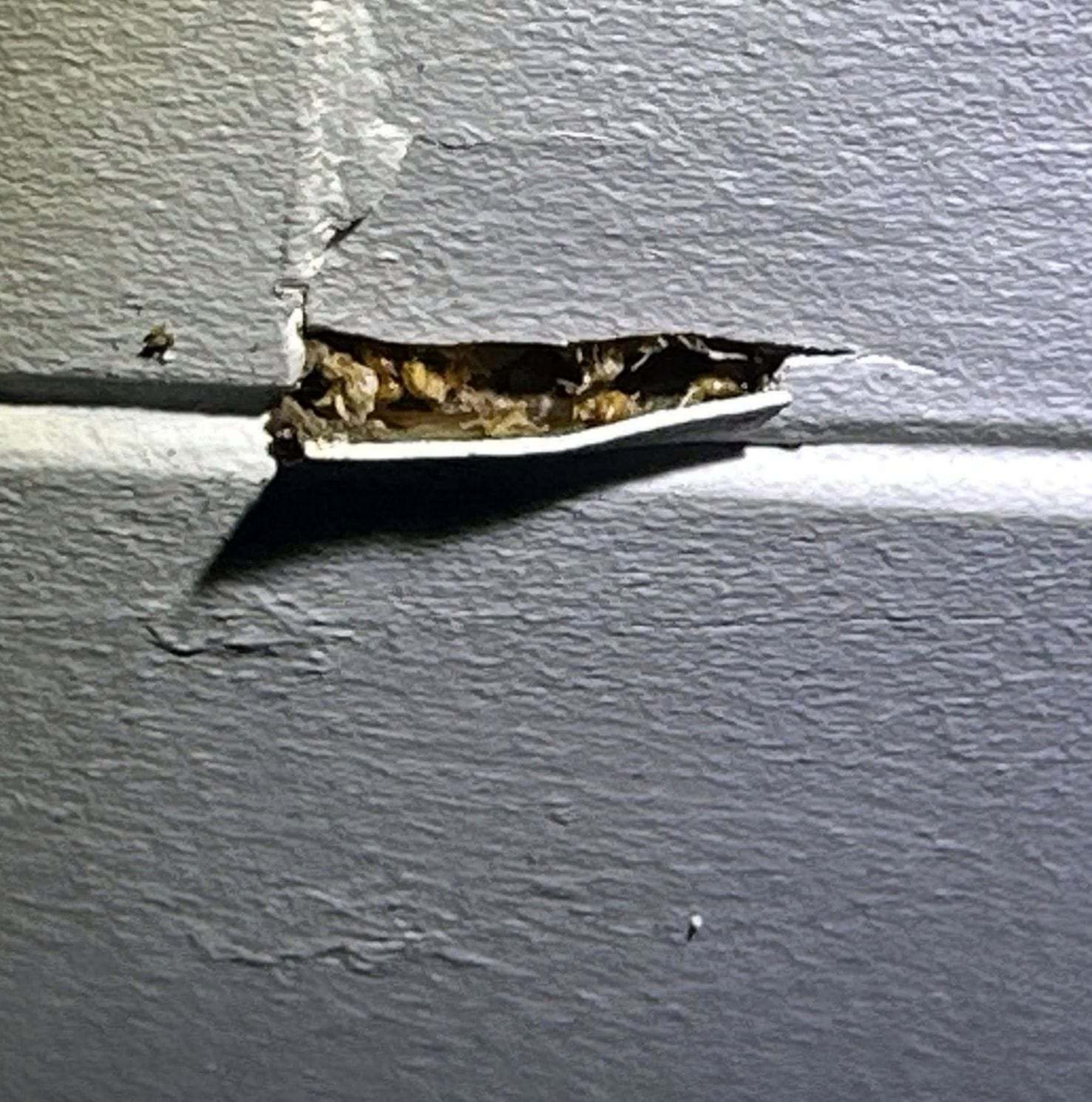
A split in the siding like the one in the photo is typical. It looks like a small cosmetic problem from the yard, but nesting material packed inside means something has already moved in behind it.
Insulation After Rodents
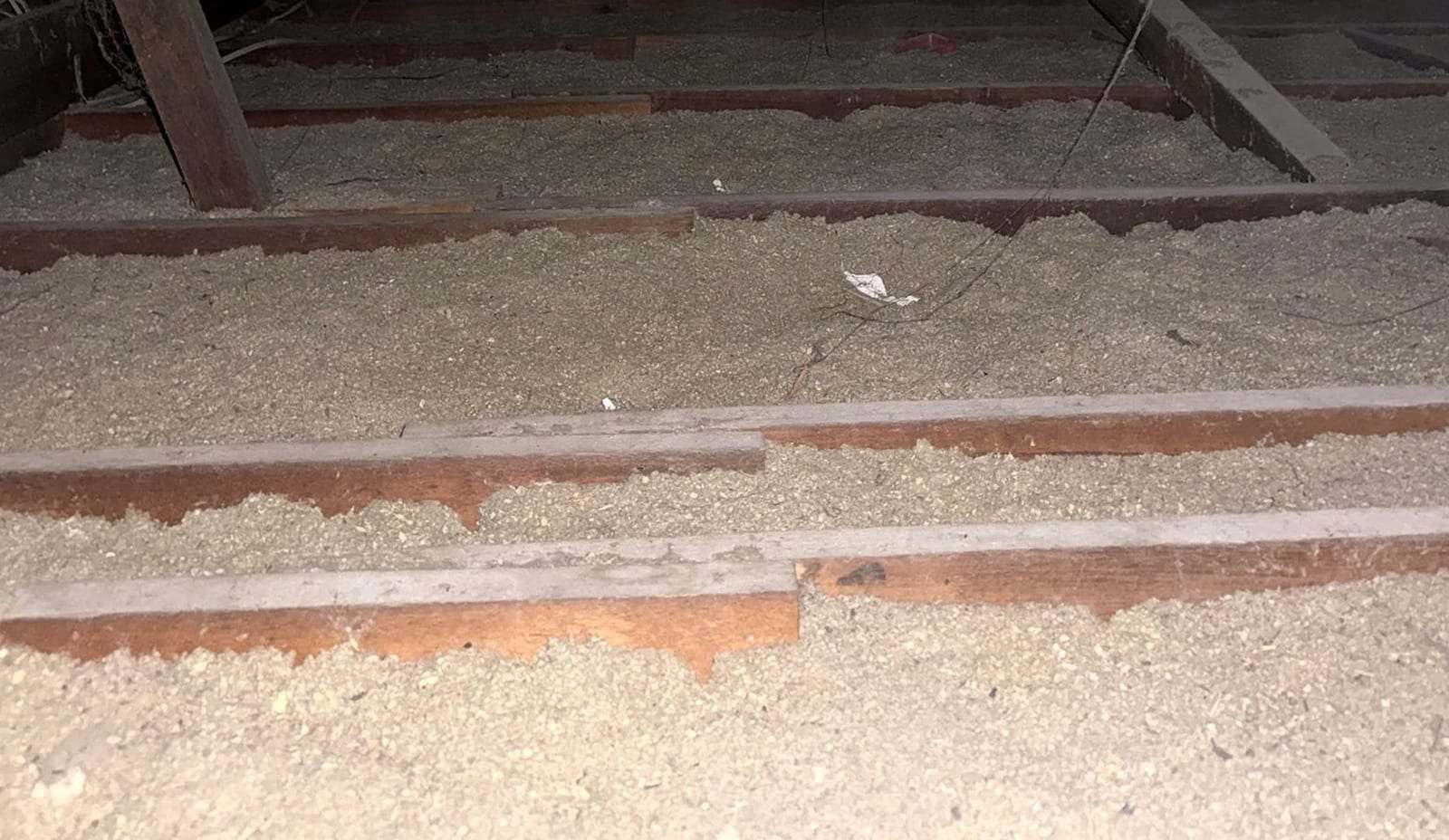
Mice, rats and squirrels nest in attic insulation and leave droppings and urine through it. Loose-fill insulation that has been tunneled through or soaked is removed and replaced once the animals are out and the entries are closed. Doing it in the other order wastes the new insulation.
Older Bethel Park and Mt. Lebanon houses often have open attics with loose-fill between the joists, which makes damage easy to spot from the hatch: look for flattened paths, shredded paper and dark spots along the joists.
Repairs Versus Treatment
Do I need a repair, or is treatment enough?
Treatment deals with the pests inside now. A repair deals with how they got in. If an opening stays open, new mice, wasps or squirrels find it again, often within weeks. When an inspection turns up a gap, a torn screen or chewed wood, the repair is what makes the treatment last.
Most repairs are booked together with the treatment, so a single visit both clears the problem and closes the opening. Bigger work, such as a long run of soffit or a whole attic of insulation, may need a second visit.
While You Wait
What should I do while I wait for the repair?
Keep food in sealed containers, clear clutter away from the walls where activity shows up, and leave droppings and nests where they are until they can be looked at. Do not stuff foam into a hole you think animals use: if something is still inside, it chews out somewhere else or dies in the wall.
Found a gap, a torn screen or chewed wood? Book the repair along with the treatment.